O'Fallon, MO
Garage Door Roller Replacement, O'Fallon MO
Cracked, worn, or jumped rollers on an O'Fallon garage door? See why this part fails here, what the repair involves, and what drives the cost.
How It Shows Up
The first sign is usually noise. A door that used to roll up quiet starts grinding, popping, or thumping as it passes a certain point on the track, and that point gets more obvious every week.
Flat-spotted worn rollers
Look closer and you'll often find a roller with a flat spot worn into it, a stem bent out of true, or a wheel that's cracked straight through and only holding together because it hasn't fallen apart yet.
Hesitation at track curve
Some owners notice the door hesitating or jerking instead of gliding, especially right at the curve where the track bends from vertical to horizontal - that's where a bad roller fights the hardware hardest. Others find the door has actually jumped the track, usually on a cold morning, because a brittle roller finally gave up and let the panel wander sideways.
Dragging roller strain
If you catch it early, it's a quiet fix. If you wait, a dragging roller puts extra load on the opener and the cables next to it, and what started as a $20 part can turn into a bigger repair. We'll tell you straight if what you're hearing is a roller or something upstream of it - they can sound a lot alike until you're standing next to the door.
The Cost of This Job
We're not going to put a number here that doesn't hold up once we're standing in your garage, because the job changes with what we find.
One roller versus full set
A single cracked roller on an otherwise healthy door is a different job than a full set of ten rollers on a door that's been grinding for a year and has worn its track in the process. What drives the price on any given call: how many rollers need replacing, whether they're plastic/nylon or steel with sealed bearings, whether the track itself is bent or just worn, and whether the roller failure has already stressed the opener or the hinges around it.
Steel versus nylon rollers
Steel rollers cost more up front than nylon, but with the income levels and home values typical of this service area, most owners we talk to would rather pay once for sealed bearings than replace nylon rollers again in a few winters.
Bent track limits rollers
The honest limitation: if your track is bent badly enough, new rollers alone won't fix the noise or the jumping, and we'll say so rather than sell you a roller job that won't hold. Sometimes the track needs straightening or replacing alongside the rollers, and that's a different conversation.
What the Fix Involves
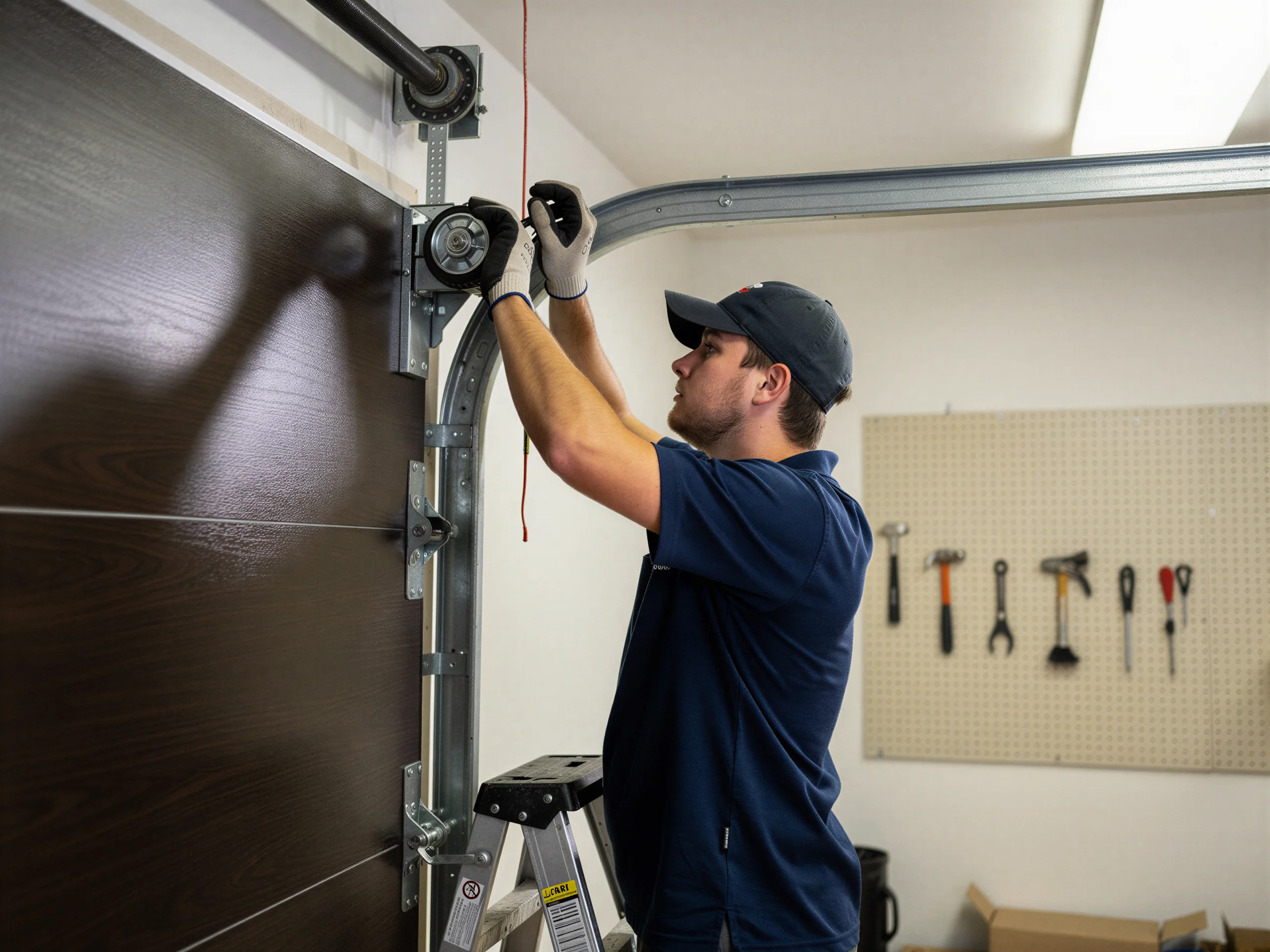
Roller replacement is mechanical work, not guesswork, but it has to be done in the right order or you end up fighting spring tension with your hands.
One-at-a-time roller removal
We release tension on the door, support it so it can't drop, and work the rollers out of the track one at a time rather than pulling the whole assembly apart at once. Each roller gets checked against the hinge it rides in - a worn hinge hole will chew up a brand-new roller just as fast as the old one wore out.
Matching stem and gauge
We swap worn or cracked rollers for new ones, matched to your door's stem length and track gauge, and we check the track itself for flat spots or pinch points while it's open and accessible. Once the new rollers are in, we run the door through a full cycle by hand before we ever touch the opener, listening for the grind or catch that brought you to us in the first place.
Checking nearby cables
Any roller job also gets a quick look at the cables and bottom brackets nearby, since a door that's been running on bad rollers for a while sometimes has wear in both places. We only replace what's actually bad - swapping a full set when half the rollers are fine just adds cost without fixing anything.
Why This Fails Locally
Housing across this service area was mostly built between 1953 and 2011, with the bulk of it going up during the 1980s and 90s across the named subdivisions here. That's a long run of doors that came factory-equipped with plastic or nylon rollers, which were standard equipment for decades and are fine for a while - but nylon doesn't age the same way steel does.
This area sits in a climate band classed as severe cold, and that matters more for rollers than people expect. Nylon gets brittle in sustained cold and then takes a hard daily cycle of temperature swing as the garage warms through the day and drops again overnight. That expansion and contraction is what turns a slightly worn roller into a cracked one, often in the same winter it finally fails outright.
So the pattern we see isn't random: a house built in that 1980s-90s wave, original rollers still in the track, several winters of cold-brittle cycling behind them, and then one morning the door jumps or starts grinding. It's less about bad luck and more about a part with a known lifespan finally running out in exactly the climate that shortens it.
Questions
Common questions
How do I know if it's the rollers and not the opener?
If the noise or hesitation happens at a specific spot on the track every time the door moves - not randomly, not only at full open or full close - that points to a roller, not the opener. The opener usually fails all at once or runs smooth until it doesn't; a bad roller announces itself gradually, at the same point, for weeks before it gets bad.
Can I replace just one roller instead of the whole set?
Yes, if the rest are in decent shape. We check each one against its hinge before recommending anything, and we won't sell you ten rollers when two are bad. That said, rollers on a door usually wear at a similar rate since they've carried the same miles, so if one's cracked, a few of its neighbors are often close behind.
Will new rollers fix a door that's jumped the track?
Sometimes, but not always. If the track got bent when the door jumped, new rollers alone won't stop it from happening again - the track needs straightening or replacing first. We check the track before we quote rollers, because putting new rollers in a bent track just buys you a repeat call.
Why do rollers seem to fail more in winter here?
This area sits in a severe cold climate band, and nylon rollers get brittle in sustained cold. A roller that's been quietly wearing all year often cracks outright during a cold snap because the material has lost the flex it had in warmer months. Steel rollers with sealed bearings don't have that same cold-brittleness problem.
Explore more
Explore More Services In O'Fallon, MO
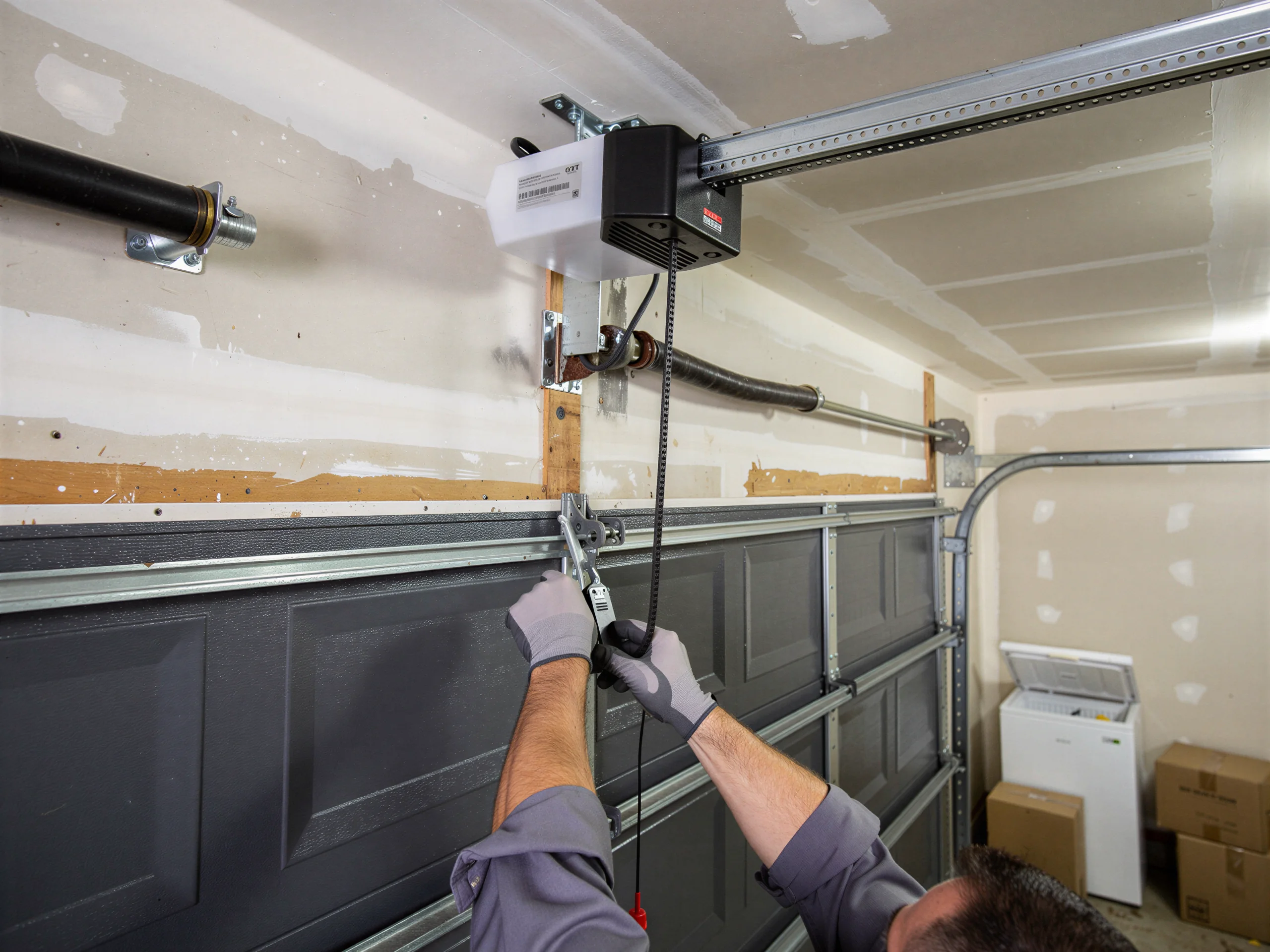
Garage Door Opener Installation for O'Fallon Houses
Opener installation for O'Fallon houses built mostly in the 1980s and 90s, where original chain-drive units are wearing out together under cold-climate strain. Learn more →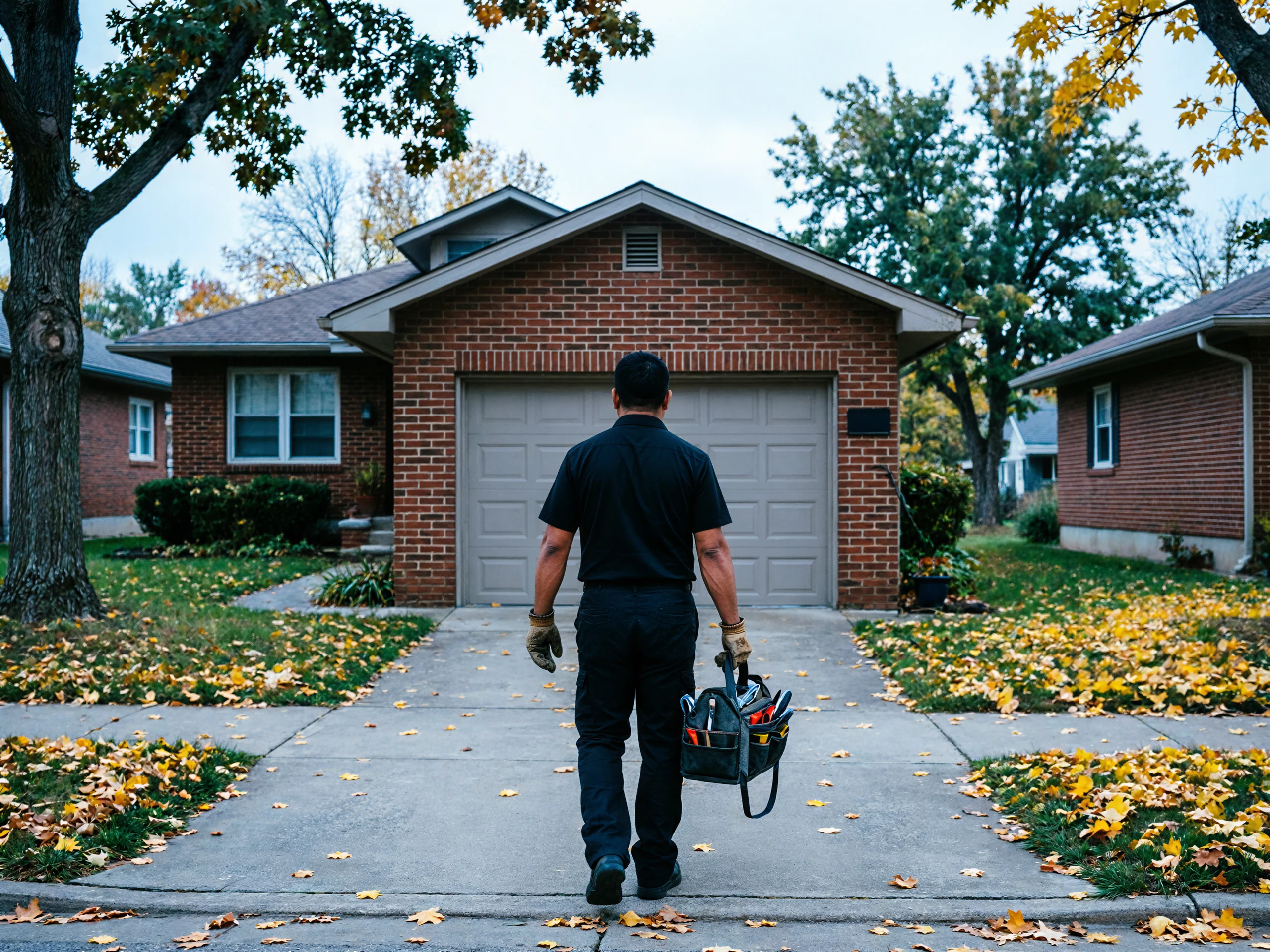
Emergency Garage Door Repair in O'Fallon
O'Fallon's 1980s-era torsion springs and severe winter swings are a common break pattern here. Learn more →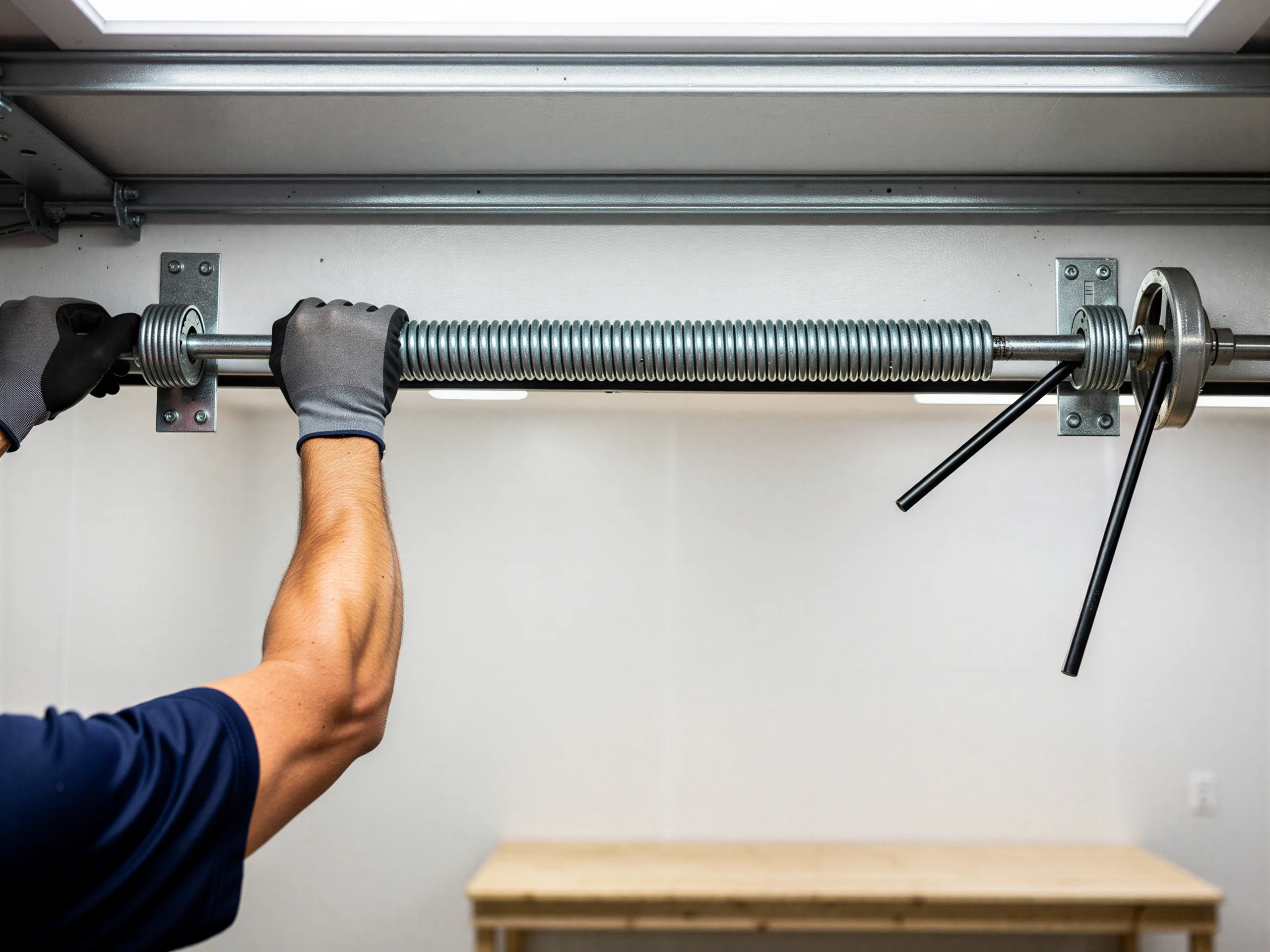
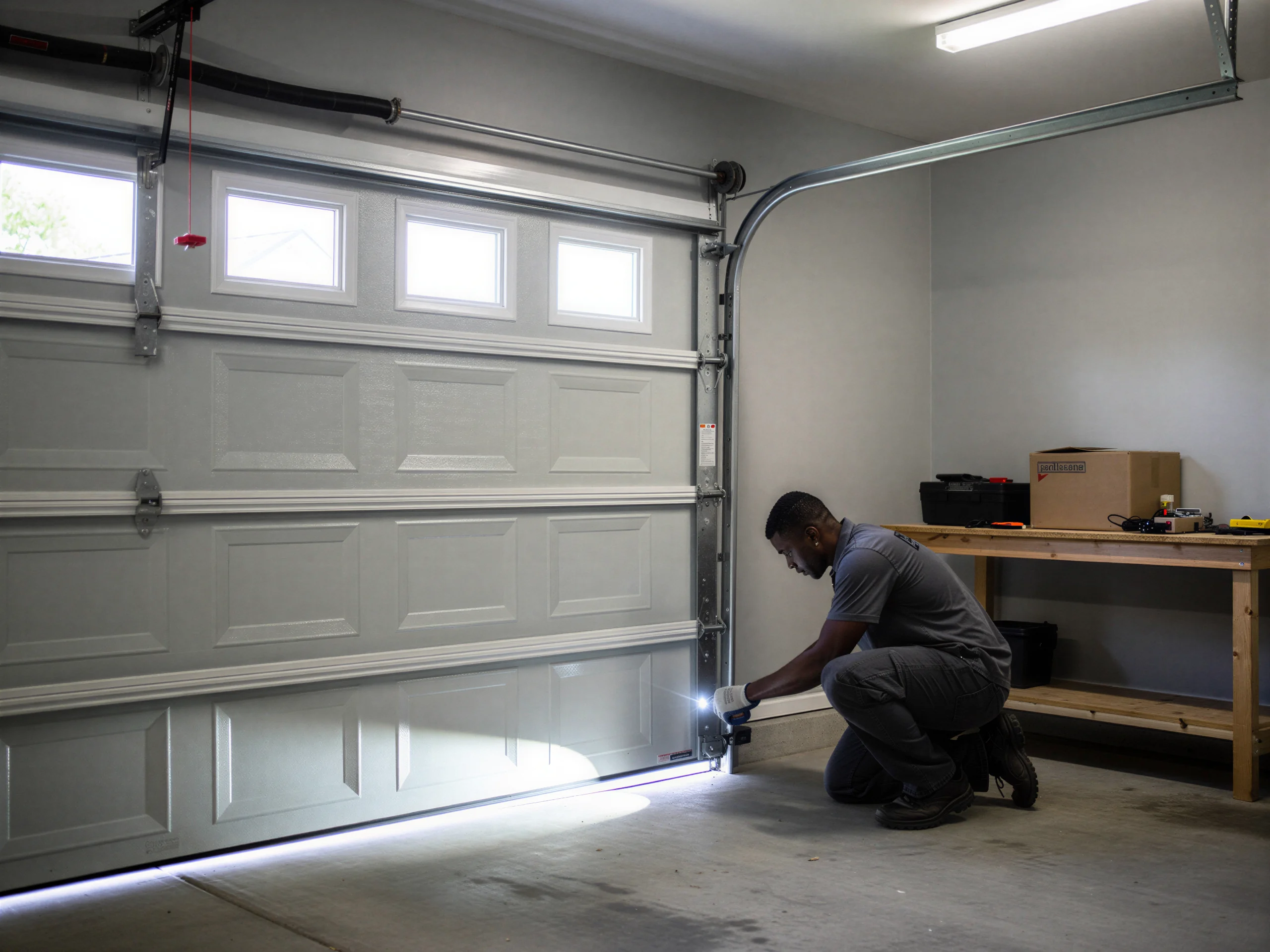
Garage Door Repair for O'Fallon's 1980s-90s Housing Stock
O'Fallon homes built mostly in the 1980s-90s face specific spring and opener failures from cold winters. Learn more →
Installing a New Garage Door in O'Fallon, MO
Garage door installation in O'Fallon, MO sized to the openings built into 1980s and 90s homes, with hardware rated for severe cold winters here, year-round. Learn more →
Garage Door Panel Replacement for O'Fallon Homes
Dented or cracked garage door panels are common in O'Fallon's 1980s-90s steel-door stock. Learn more →Ready when you are
Noisy or worn garage door rollers in O'Fallon?
O'Fallon Garage Door Pros repairs and installs garage doors, springs and openers in O'Fallon, MO and the surrounding area.