Local detail
The Cost of This Job
We can't post a number here that holds up across every job, because a bent track on a 2005-built door and a seized torsion spring on a 1989-built door aren't the same call. What we can tell you is what drives the cost: whether the opener and spring are original to the house, whether the track has rusted at the bottom brackets, and whether the panel itself needs replacing or just the hardware around it. O'Fallon's housing stock runs from 1953 up through 2011, with the bulk of it built through the 1980s and 90s, so a lot of our calls are on doors and openers that are now old enough to have outlived their original springs and rollers but not old enough that the homeowner expects it. If your opener motor and the door panels are both original to a house built in that window, expect the service call to turn into a conversation about what's worth fixing versus replacing. We'll always tell you straight when a repair isn't worth the parts and labor against a full door swap.
The area
What Is Going On
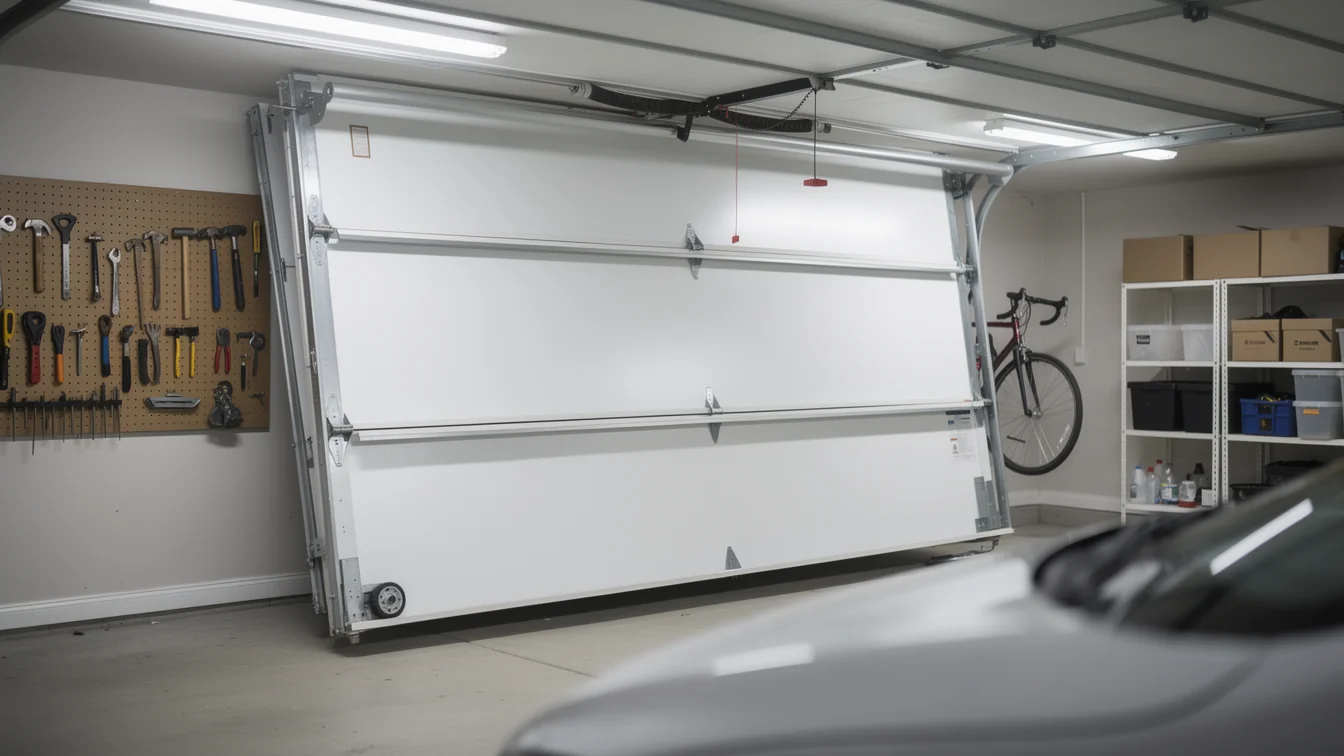
Most of what we find on a service call traces back to the age of the hardware, not a single dramatic failure. Across the 28 named areas we work in, the typical door is a 1980s or 90s build with the torsion spring, cable, and rollers original to the house. None of that is rated to last forever - springs are rated in cycles, not years, and a 30-to-40-year-old spring on a door that's been opened twice a day has simply used up its life. We also see a lot of track misalignment from houses settling over decades, which shows up as a door that binds or runs loud on one side. On newer builds, closer to the 2011 end of the range, the issues are usually electronic - opener sensors, circuit boards, remote programming - rather than mechanical. Knowing roughly when your section of O'Fallon went up tells us which problem we're more likely walking into before we even open the panel.
What we find
What the Weather Here Does to It
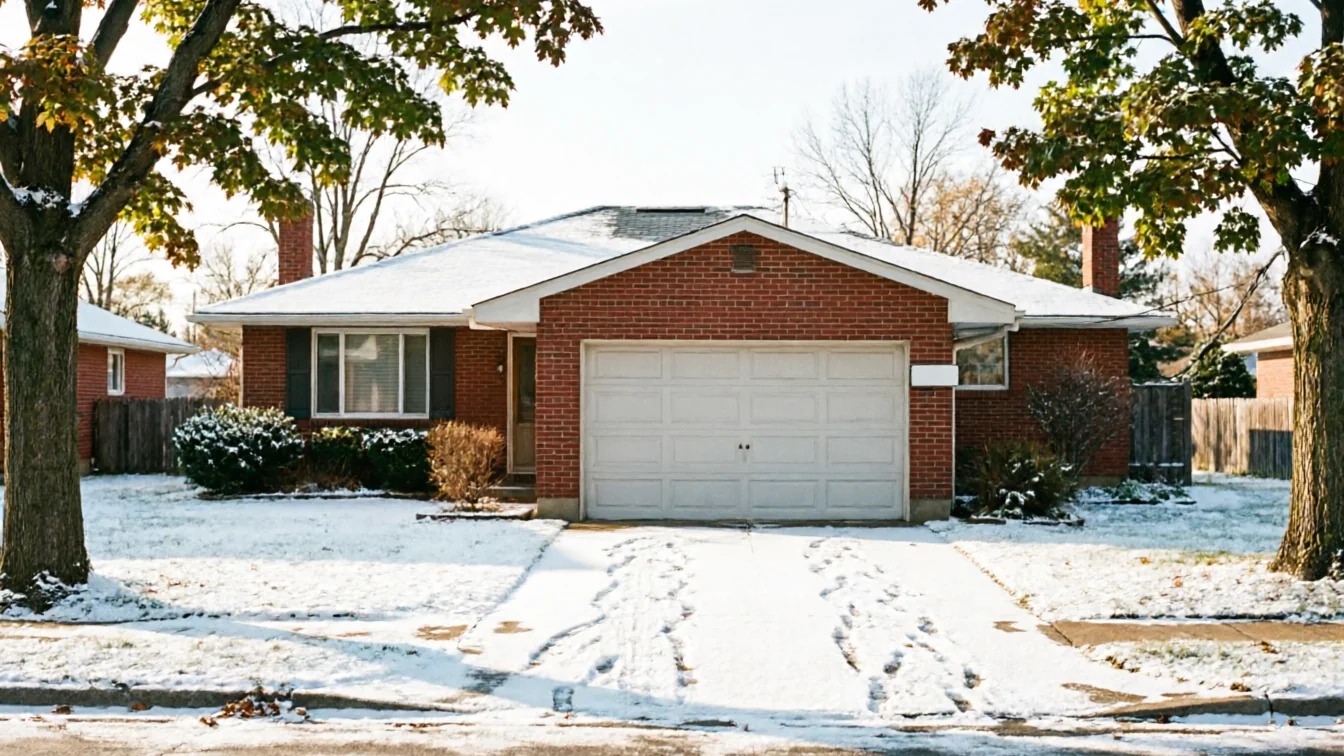
This is a cold-climate service area, and that matters more for garage doors than people expect. Steel contracts in hard cold, which tightens tolerances on tracks and rollers that were already loose from age, and it stiffens torsion springs right when you need them to flex smoothly to lift a heavy door. We see a seasonal bump in calls for springs that finally let go on the first real cold snap, not because the cold broke them but because decades of cycling already weakened them and the cold was the final push. Weatherstripping on older doors also hardens and cracks in this climate, which lets cold air and moisture into the garage and, over winters, into the track hardware itself, speeding up corrosion on the bottom brackets. If your door is noticeably harder to lift in January than in July, that's not your imagination - it's the spring and the cold working against each other.
How we work
When It Stops Being a DIY Job
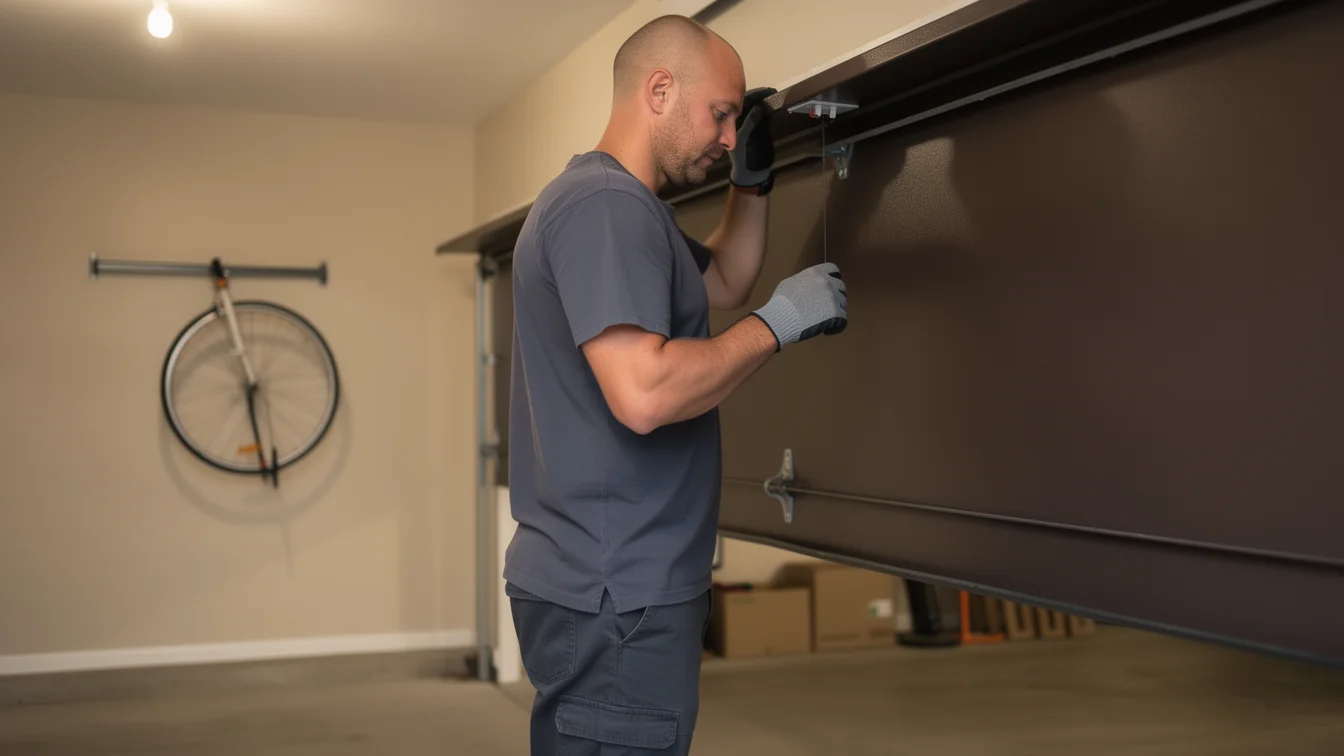
Lubricating hinges, tightening loose bolts, and clearing a dirty photo-eye sensor are fine for a homeowner to handle. A torsion spring is not. These springs are wound under enough tension to cause serious injury, and on the 1980s and 90s doors common across O'Fallon, that spring has usually never been replaced, which means it's old, corroded, and more likely to fail in a way you don't expect mid-repair. The same goes for cable replacement and any work on the bottom brackets, since those are also under load. If your opener is original to a house from that era and the logic board is failing, that's also past the point of a quick fix - replacement parts for boards that old are often harder to source than we'd like, and we're upfront when a repair will mean a wait on parts versus just moving to a new unit.
Talk to a local pro
Garage door trouble in O'Fallon?
Same-day service with honest, upfront quotes.