Local detail
The Cost of This Job
We can't give you a number over the phone and we won't pretend to. What a job like this costs depends on whether the track itself is bent or just knocked loose, whether a roller sheared off inside the track, and how old the hardware is to begin with. A lot of the housing stock around here dates from 1953 to 2011, with the bulk built in the 1980s and 90s, which means the track, hinges, and rollers on plenty of these doors are original equipment pushing thirty or forty years old. Replacing a short run of track on a door that age is a different job than realigning a track on a door installed in the last decade. Sometimes the fix is a twenty-minute realignment. Sometimes the track is bent enough that patching it just buys you another call in six months, and replacing the section is the honest answer even though it costs more up front. We'll tell you which one you're looking at before we touch anything, not after.
The area
What Is Going On
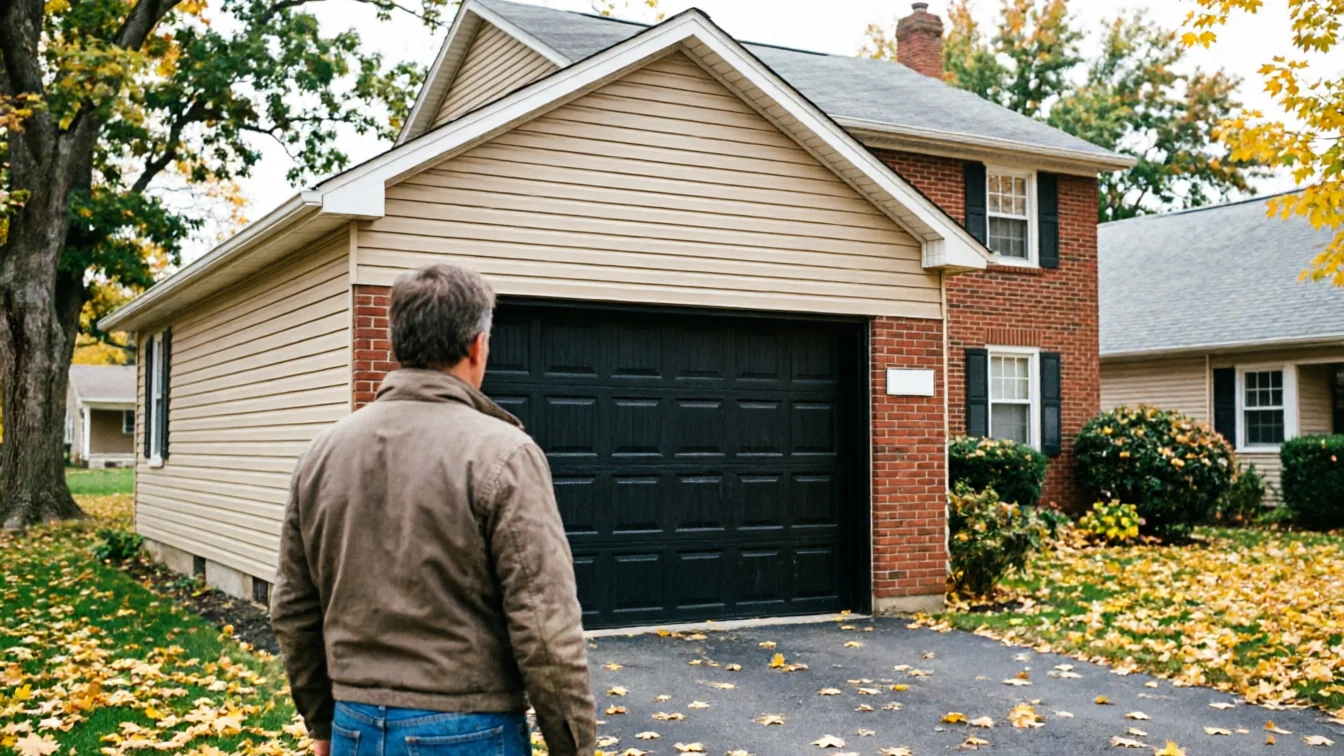
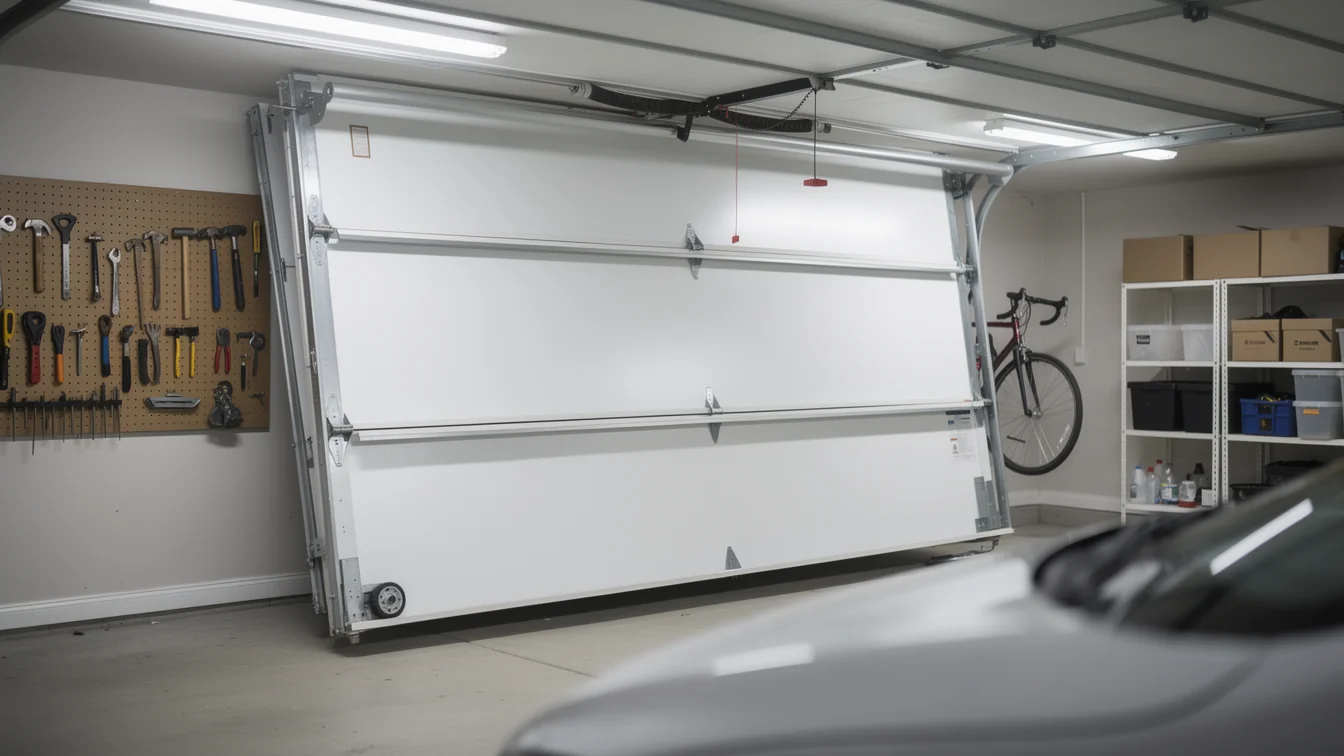
A door comes off track for one of a handful of reasons: a roller breaks or wears down to the point it won't stay seated, the track itself gets bent or knocked out of alignment, something blocks the door's path and forces it sideways, or the brackets holding the track to the frame work loose. In a lot of O'Fallon's housing, built mostly through the 1980s and 90s, you're dealing with steel track and hardware that's been doing this job every day for three or four decades. Metal fatigues. Bolts back out a quarter turn at a time. Rollers that were fine for twenty years start binding, then jumping, then finally skip the track rail entirely on a cold morning when everything's stiff. It's rarely one dramatic event. It's usually the last straw on hardware that's been loosening for a long time, and the owner only notices the day the door stops closing straight.
What we find
What the Weather Here Does to It
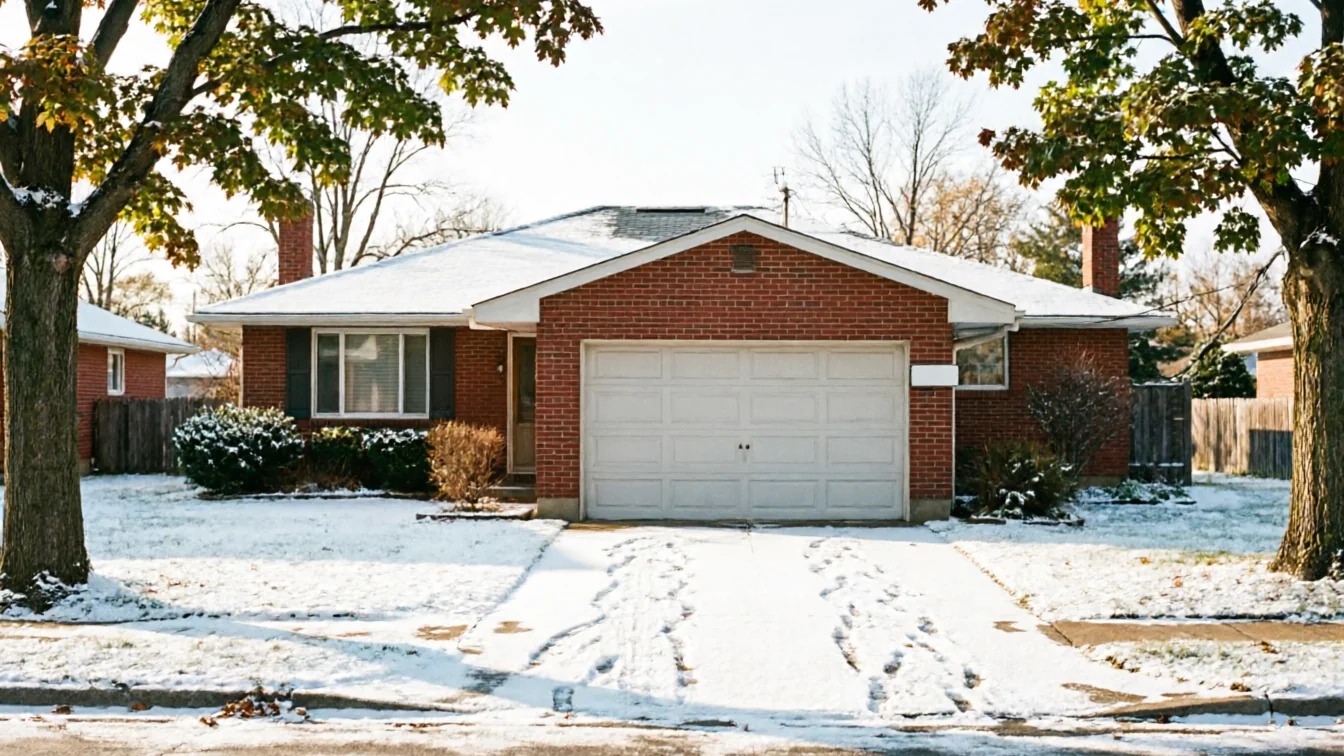
O'Fallon sits in a climate band classified as severe cold, and that matters more for a garage door than most people expect. Steel track contracts in cold weather, which can be enough to pull slightly loose brackets the rest of the way free. Grease and lubricant on rollers and hinges thickens up and stops doing its job right when the door needs it most, so rollers drag instead of rolling, and a dragging roller is a roller that's more likely to jump the rail. Condensation that forms overnight on the bottom section of track can freeze into a thin skin of ice, and a door closing down onto that ice gets a shove sideways it wasn't built to take. None of this is dramatic on its own. It's cumulative, and it lands hardest on track and hardware that was already working loose before winter started.
How we work
When It Stops Being a DIY Job
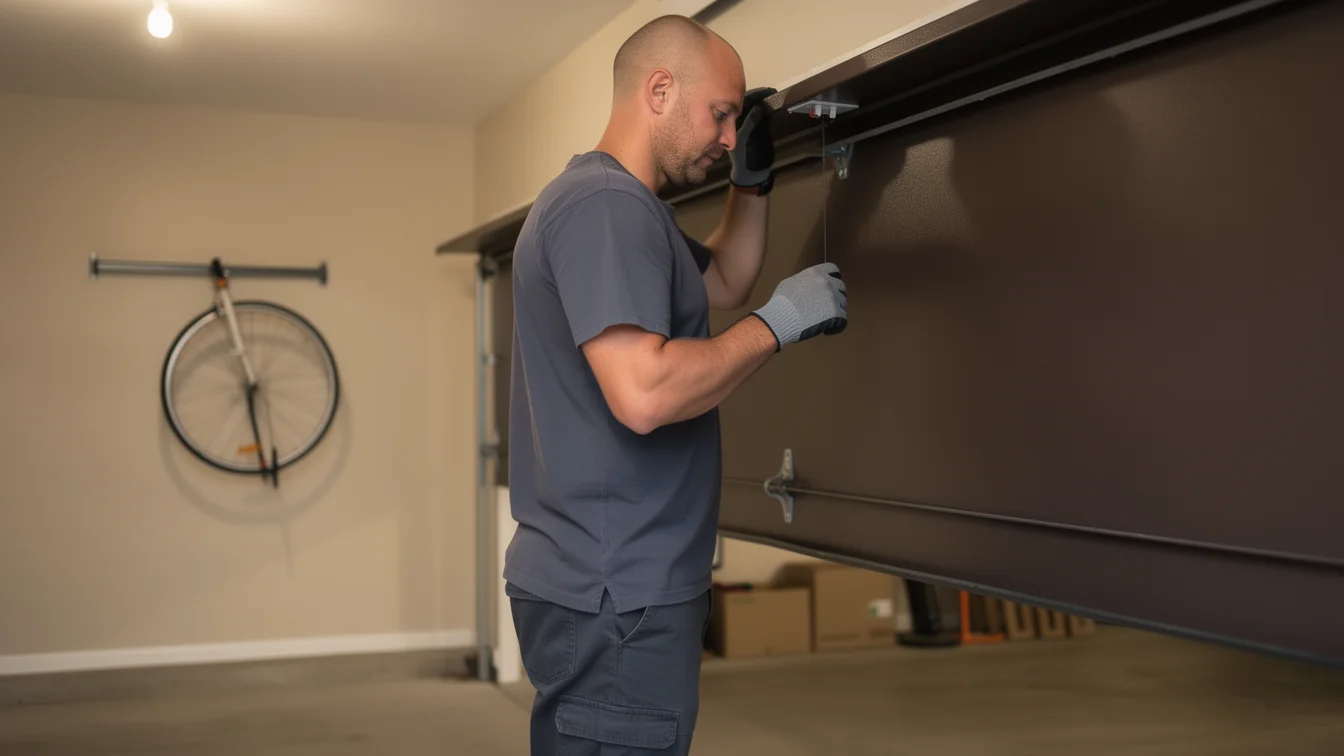
If the door is just hanging slightly crooked and a roller popped free of a straight section of track, that's sometimes a job you can walk through yourself with the door disconnected from the opener. If a cable has come off a drum, if the track is visibly bent rather than just misaligned, or if the door came off track while it was under spring tension, stop. A door under tension that lets go wrong can take a hand or a finger, and bent track almost never straightens back to true no matter how it's muscled. At that point you're not saving a service call, you're turning one call into two. Call us when there's a cable involved, when the bend in the track is visible without a level, or when the door won't move at all. We'd rather tell you it's a ten-minute fix than let you find out the hard way it wasn't.
Talk to a local pro
Garage door trouble in O'Fallon?
Same-day service with honest, upfront quotes.