Local detail
The Cost of This Job
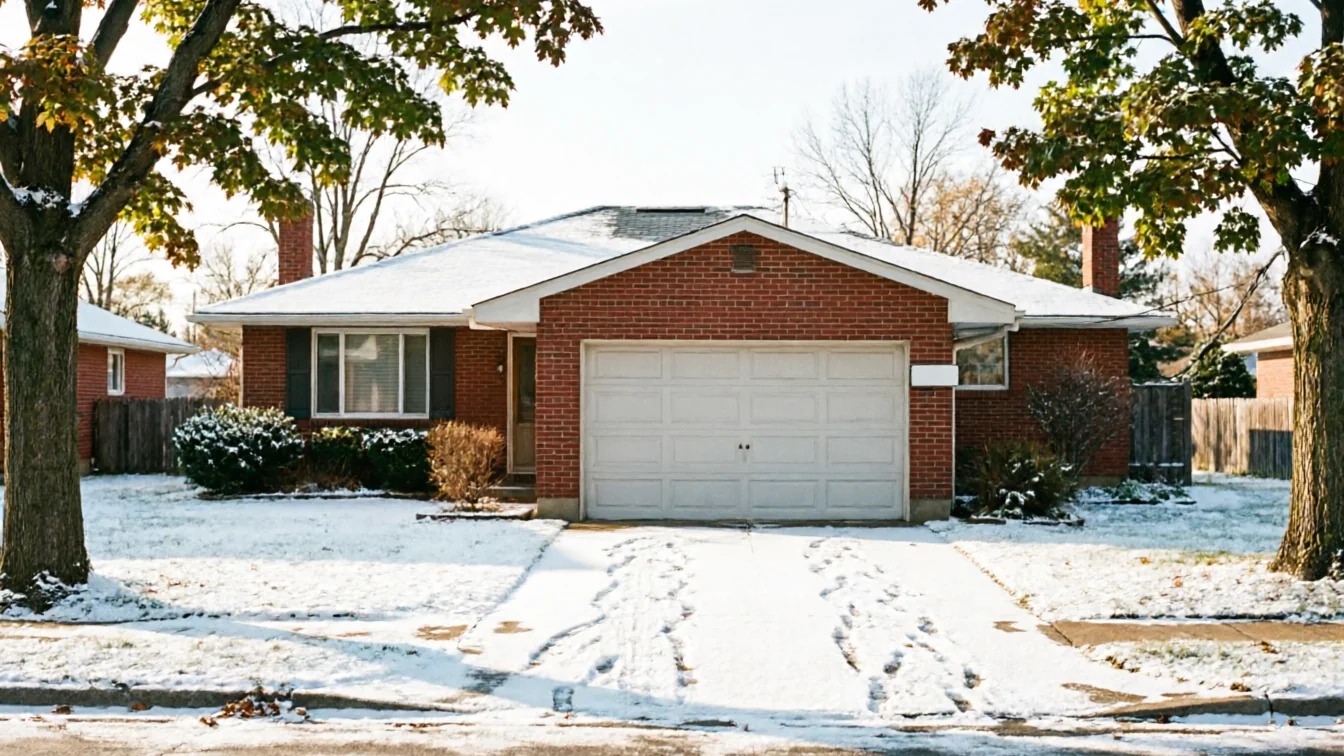
We can't quote you a number without seeing the opening, but we can tell you what moves the needle here. Houses in this market went up mostly between 1953 and 2011, with the median build year at 1989, so a lot of garages were framed for the door sizes and track clearances standard to that era - single 8-footers and double 16-footers on side-room that doesn't always match what a newer insulated door needs. If your opening is original, fitting a modern door sometimes means adjusting jamb or header trim, and that's labor, not just the door itself.
Insulation is the other driver. Given the cold-climate band this area sits in, an uninsulated steel door costs you real heat loss all winter, so most jobs here end up spec'd with a polyurethane core rather than the bare single-layer panel that was standard when these houses were built. That's a meaningful jump over a hollow door, but it's the difference that actually shows up on a heating bill.
Median household income in this service area runs $109,049, which means a full insulated replacement is a normal, planned purchase for most owners here rather than a stretch - but we'll still tell you honestly when a repair gets you another five years cheaper than starting over.
The area
What Is Going On
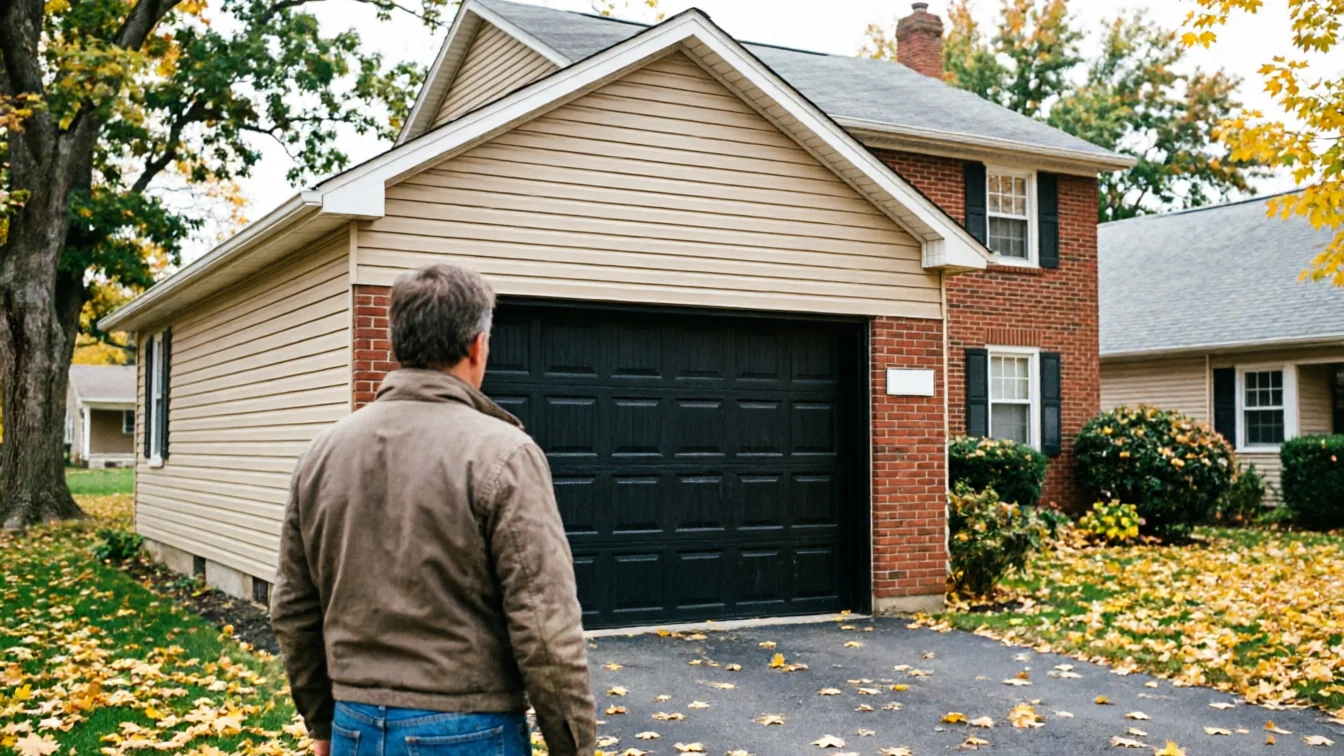
Across the roughly 28 named subdivisions that make up this market, most of the housing stock dates to the 1980s and 90s. That matters because the garage door hardware installed during that build-out - openers, torsion springs, galvanized track - is now thirty-plus years old in a lot of these garages, and it's aging out all at once rather than one house at a time.
With 88,813 owner-occupied houses among 164,355 households in this area, that's a large base of doors built to a similar spec in a similar window. What we see on calls lines up with that: springs that have cycled past their rated life, openers from a generation before modern safety reversal sensors were standard, and original rollers that were fine for twenty years and are now the reason the door shudders on the way up.
It's not that anything was built wrong. It's that a house built in 1989 and a house built in 1991 are hitting the same wear points on the same door at the same time, because they were put up in the same few years by the same handful of builders working off the same catalog.
What we find
What the Weather Here Does to It
This area falls in a climate band the federal data classifies as severe cold, and that shows up in specific ways on a garage door rather than as generic bad weather. Steel contracts in deep cold, so a door that was adjusted and balanced in July can bind or drag in January simply because the panel and track have shrunk slightly out of the tolerance it was set to. That's not a defect - it's a seasonal adjustment most owners here end up needing once a year.
Cold also stiffens lubricant and nylon rollers, which is why doors that ran quiet all summer start grinding the first hard freeze. Torsion springs lose a little tension capacity in sustained cold too, so a spring that's already near the end of its cycle life is more likely to let go in winter than in a mild month.
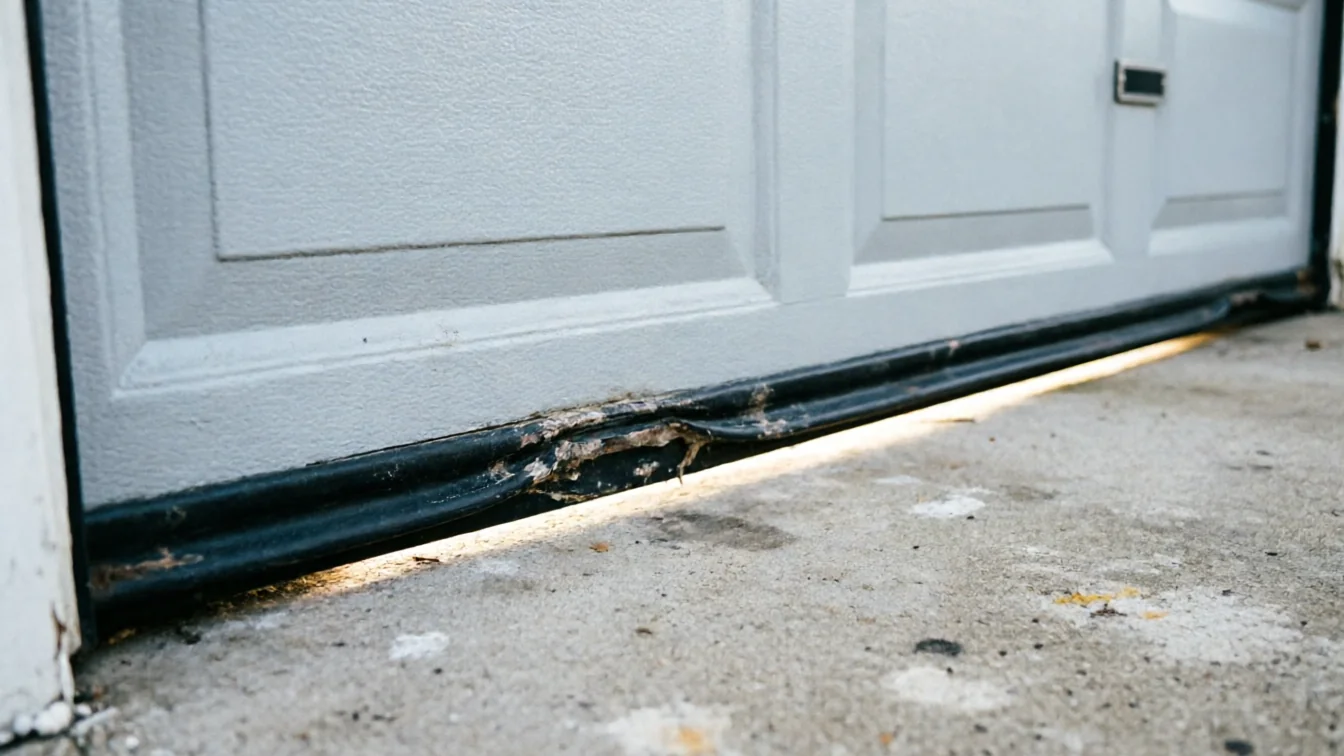
We don't oversell weatherproofing - a bottom seal and a properly sealed insulated panel handle most of what severe cold throws at a door here. What we won't do is tell you a door failure in February was caused by the cold when the real issue was a spring that was already past its rated cycles before the temperature dropped.
How we work
When It Stops Being a DIY Job
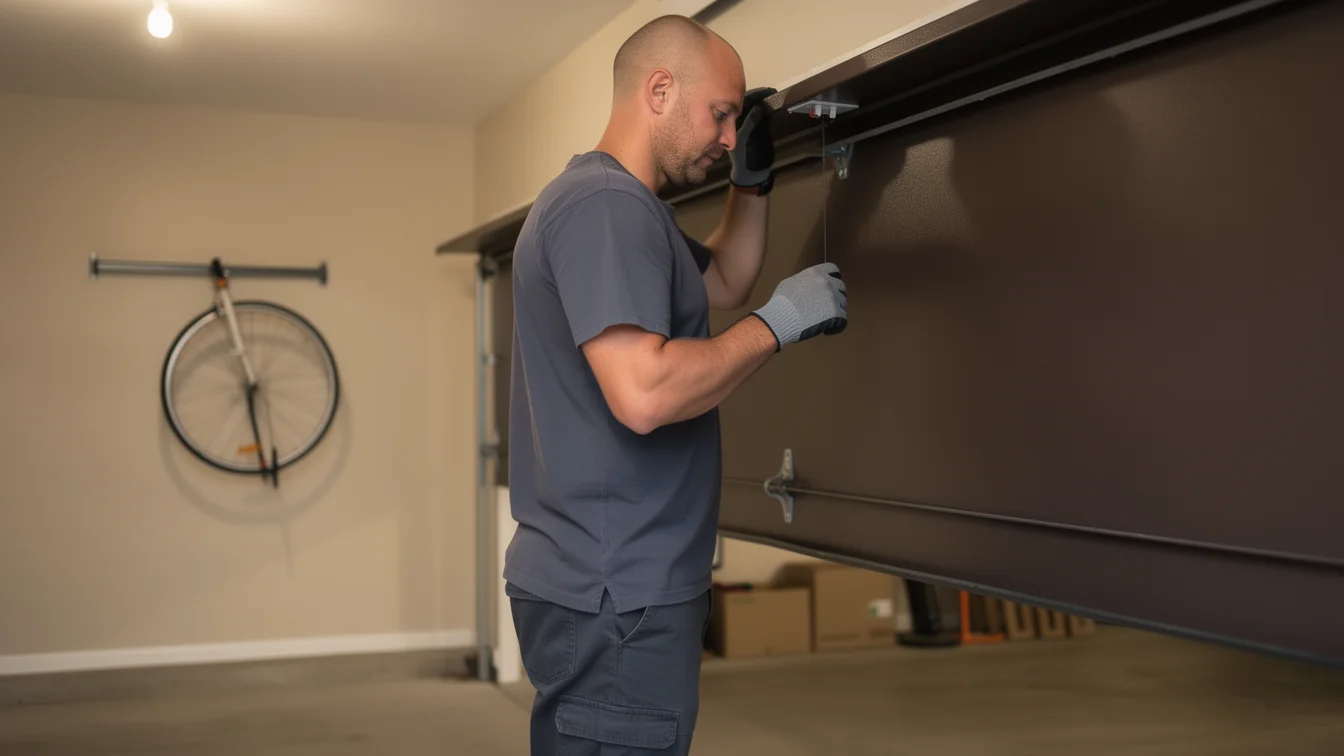
Tightening hinges, lubricating rollers, and swapping a remote battery are fine to handle yourself. Torsion spring work is not - the spring on a double door built to this area's typical sizing is wound under enough tension to cause serious injury, and it's one of the few jobs in this trade where we tell owners flatly to call rather than watch a video.
Given how much of this area's stock is original 1980s-90s equipment, we also see a lot of openers that are simply too old to safely pair with a newer door - the drive mechanism and safety sensors weren't built for today's heavier insulated panels. In that case, replacing the opener alongside the door isn't an upsell, it's a mismatch you'd otherwise be stuck living with.
The honest limit on our end: if a door is more than a couple decades old and the track, springs, and opener are all near end of life at once, we'll usually tell you replacement beats repair, because patching one part just moves the next failure a few months down the road. We'd rather say that up front than bill you twice.
Talk to a local pro
Garage door trouble in O'Fallon?
Same-day service with honest, upfront quotes.